Monday, June 28, 2010

Movers and Shakers


Hamish Riordan took a pull on his flat white, it did no good; he felt truly awful. Hung-over from the wine and scotch and still groggy from the ganja; he stank of sweat and cigarettes and when he took the first piss of the day he realised he must have had sex with someone, he vaguely worried about the clap.

Riordan was sitting in an out of town café, all miss matched furniture and red paint, at least the coffee didn’t actually make him sick. There were nick-knacks everywhere, old type set boxes that he remembered as being fashionable when he was a child filled with trinkets, old tools screwed to the walls, batik cloth stapled to the ceiling, lamps everywhere, which in his condition, created disturbing light and shade. The effect desired was old hippy opium den the actual sensation was of confusion.

Riordans’ own style was far more urbane and he liked to think he had an eye for elegant sophistication, he preferred a stripped back brutal minimalism with a peppering of contemporary and period classic design. This place ‘The Bodhisattva Café’, made his head ache and his stomach churn.

Riordan was the Arts Manager for the City Council, a position he though he had earned with consummate management skills and political acuity. The reality was that he had drifted through projects and meetings with a milky eyed stupor often missing essential points with a startling lack of insight. His immediate colleagues thought him a dolt but further a field people thought he possessed a kind of Zen, and most of his projects bore fruit.

Riordan was meeting up with a young sculptor who he had heard of at a party. Fresh from art school, an ‘emerging’ talent his confidant had enthused, a term which he hated, as it reminded him of the crowning head of a new-born appearing from a bloodied vagina. He shuddered and shook the image off like a retriever shedding water. The ‘talent’ was late.

The scruffy youth appeared at the glass door and cupped his hands around his eyes as if he were holding binoculars. He tilted his head in recognition and opened the door, which announced his entry with the tinkle of the many small brass bells attached to it.
“Hey, Hamish” the young sculptor said.
Hamish hated this alliteration and thought to himself “hey yourself cunt” but actually said “good morning Peter,how are you?"
“long black thanks” answered Peter “and please; call me Pete”

The meeting had been set up the previous week to see if the young sculptor would be interested in a minor public commission, which of course he was. The site was a roundabout surrounded by a Library, an R.S.A., a medical centre, a kindie' and a lunch bar. There was a lot of visual clutter, lamp posts and a pedestrian crossing, signs advertising ‘Hot Pies’, a mural with a giant white bunny and several red and white spotted toadstools, a flag pole and of course, a 25 pound field gun.

The traffic management department had wanted some mid scale planting on the round about to slow the traffic. This was the sort of opportunity where the Arts Management team struck. A site and a budget, usually miniscule, but a starting point.

“What have you got for me Peter?” quizzed Riordan. He had briefed the sculptor the previous week to view the site and come up with some sketches. He had to be careful here to stress that it was all very informal and not to get his hopes up, which was an unspoken code for ‘we have no budget for the development of the work’. He knew most green artists would do pretty much anything for the opportunity.

The sketchbook appeared. Drawings with careful measurements and sightlines, delightful images of the shops with people gaily going about their business and drawing after drawing of a beautiful, lyrical process. The final sketch was inked over and had a delicate colour wash, which brought the scene to life. It was as if the sculpture already existed and he had carefully recorded it; he had nailed it.

Riordans’ heart sank, dismay adding to his incipient hangover, this was too much and this was too good. He knew what he had to offer should not buy work of this quality. But that was why he was Hamish Riordan Arts Manager, he could swing this.
“Well Peter, you have obviously spent time on the site but is this all you have come up with? I was hoping for a range of options, maybe not so worked up, to take to the committee” Riordan preached. “ this is fine but what if they don’t like it? Did you not think of that?”

Petes’ face darkened, “ that is top work, how can you ask for more than this?” he said with an even and steady voice. “ and before you start asking for more, I really need to know how much money the Council is putting up for this work.

“Shit, little cunt… fucker” thought Riordan “ No; I realise that you are very close to this work... being your first commission you are perhaps a little too close to it… we need, well, less quality and a little more quantity” It didn’t quite come out the way Riordan wanted it to and Pete pushed his chair away from the table.

“ What’s the budget Hamish?” he demanded.

“ Look as a starting point I am authorised to offer you $3,000 but who knows how much this can become as we develop the commission”. He lied. The $3,000 was the amount put aside for the planting of pittosporums on the round about. “ I will take these drawings to the committee and you could come up with some more concept sketches in the mean time”. Riordans bluster was fading as he watched Petes’ face harden.


“No” said Pete quietly, he picked up his drawings “ and by the way, you really need a shower” and left the café with a gently tinkling exit.

“ Fuck, fuck, fuck, ungrateful fucking…aaah, God” Riordan had royally messed that up, a bit too hung over to do the charm thing. Still he had a list as long as his arm of prospective sculptors, just his luck to strike one with talent. “Wanker.” He said out loud and one of the other customers looked at him darkly. He snarled.

Riordan opened his brief case and took out his diary and cell phone and wondered who was next on the list. In the process he knocked over the salt and pepper shakers, as with everything in the café it was mismatched, he held the weirdly phallic looking salt shaker and studied it. He knew someone in the film industry who was an expert with polystyrene and fibreglass and cheap.

The only Regret Hamish Riordan had was that he hadn’t thought of the idea sooner.

Monday, May 24, 2010

Giraffe-Bottle-Gun


I was in the Capital at the weekend and went to The Museum of New Zealand. They happened to be showing Judy Millar's Venetian Biennale effort Giraffe-Bottle-Gun. I have read quite a few negative posts around this work especially peoples dislike of the laser printing of the giant vinyl elements of the installation. I thought the whole effort was bloody marvelous.

The scale of the frames is as big as the titled giraffe and if we accept that these are paintings, they are more overwhelming than McCahon's giant canvass Hi-Fi and the only other works that I have experienced that are in this league are those of Anselm Keifer and Mark Rothko.

But then again they aren't paintings, they are printed copies of Millar's marks, simulations. I was made into an ant but unlike Keifer and Rothko I wasn't about to be crushed by their bombastic, hyperbolic truths.


The other point of contention raised by critics of the work, is the inclusion of Millar's original, authentic paintings; conventionally framed and neatly lined up. The marks on the paper are in proportion and unpixellated; dry rather than vinyl greasy and slightly op', slightly more ab-ex. The human scale makes them readable and approachable. The in scale action painting makes sense to the eye and the brain. They are the exact opposite of the vinyls.

And there it is; this polarisation of effects places the viewer as the arbiter of two manifestations of the same practice. Giraffe-Bottle-Gun is unique in treating the viewer to scale, style and respect.

Wednesday, May 19, 2010

Man Overboard

This is my new writing space. I have been posting to several other sites, mainly 'Artbasher' under the nom-de-plume William Blake. You may notice that in 'Blogger' the n-d-p has changed to Kim Finn-arty, this was mainly to keep one step ahead of other blogger posters who refuted pen names. Anonymity is a handy too in the tiny NZ art scene; because they are all petty, backstabbing bastards. Try saying that with your real name appended; even if it is the truth.

The n-d-p is also quite handy when dissing your mates, roasting your dealer or bemoaning the discounts that collectors can demand. There is also the twisty issue of tacky self promotion.

So the anonymity is a life preserver for the man going overboard.

The Cat In The Hat; King Hit Or Sucker Punch?


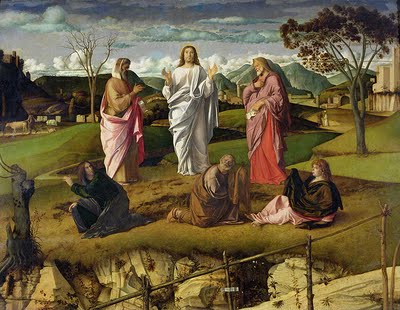
The year is 1959, a young Peter McCleavy has just stepped off the banana boat to Europe. He is in Naples, standing transfixed in front of Giovanni Bellini’s The Transfiguration.

“ Which I found overwhelming. In those days, you could stand right close to the paintings – there were no security guards…and you could see the man who painted
the thing. You could see the brush strokes, the bits of hair from the paint brush. For the first time, I realised art was made by someone, by a human being.”

(The Listener Nov-Dec 2009 p36)

No doubt an apocryphal tale; McCleavy must have seen original paintings before leaving New Zealand and understood the process of applying paint to canvass. Seemingly before McCleavy had his Neapolitan epiphany there were no artists of sufficient genius for him to realise the humanity in home-grown art.

On his return to New Zealand ‘the cat in the hat’ happened across another Catholic painter who also left hairs in his paint.

The year was 1964. The venue was Lewistown, Maine. An outspoken negro muslim named Cassius Clay was to challenge the enigmatic title holder, Sonny Liston for the world heavyweight championship. It was a rematch bout. The initial showdown had ended in controversial circumstances when Liston refused to leave his corner in the seventh.

Around two thousand people squeezed into the auditorium, watching Clay in his white Everlast booties dance gracefully for maybe the first minute. Liston watched too, jabbing occasionally. Moments later, The 'Big Bear' from Arkansas falls unconvincingly to the canvas. Few spectators see the knockout blow. The replay is inconclusive. The muslim does not retreat to his corner, and the count does not start. "Get up and fight, sucker!" he spits. Someone takes a photo.

The exploited crowd chants deliriously. "Fix! Fix! Fix!"

King Hit

1. The most hardcore, damage-maximising, chronicly solid punch that can be thrown. Send's the aggressor off balance if it doesn't hit the intended target.
2. A Very Very large sized bong of cannabis.
1. "He tried to King Hit me, so I easily dodged to the right, jabbed him twice in the stomach, then let go a King Hit of my own while he was still keeled over."
2. "Ohhh...That waz a King Hit!"

Sucker Punch

This occurs when someone hits someone else from behind, usually when the person being hit doesn't know it until afterwards. Usually considered shady or a "bitch move".
That motherfucker came up and sucker punched me!


Thanks to the Listener, The urban dictionary and the roast.

The Race


The 1957 German Grand Prix was a Formula One race held on 4 August 1957 at Nürburgring. The 22 lap race was won by Juan Manuel Fangio, (Balcarce, 24 June 1911 - Buenos Aires, 17 July 1995), nicknamed "El Chueco" ("knock-kneed") and is often cited as one of the greatest victories in racing history.

Fangio had taken notice of the tire and fuel-level selection of the Ferrari drivers, and realized they were probably going to run the entire race without a pit stop. Fangio decided he would use softer tires, and only a half tank of gas. This would allow the car to take corners faster, but also require a pit stop. Fangio took his pit stop on lap 13, in 1st place, and 30 seconds ahead of Hawthorn and Collins.

The pit stop was a disaster, the pit crew had trouble removing one of the wheels. Fangio left the pit lane in 3rd place, and 48 seconds behind Collins who was in 2nd place. Over the next 10 laps, Fangio broke and rebroke the lap record 9 times (7 of the records were in successive laps). Early in the 21st lap, Fangio was beside Collins on a straightaway, approaching a bridge that was barely wide enough for both cars to fit side by side. Collins backed off, and Fangio took 2nd place. Late in the 21st lap, during a left corner, Fangio cut past Hawthorn on the inside of the corner, with only his right tires on the track and his left tires on the grass. Fangio maintained his lead, and won the race.

After the race, Fangio commented, "I have never driven that quickly before in my life and I don't think I will ever be able to do it again".

He won five Formula One World Driver's Championships — a record which stood for 46 years until eventually beaten by Michael Schumacher

Many weeks away by boat in 1957 Colin McCahon begins a second series of French Bay paintings which are even more radically prismatic and brilliantly coloured than his first series. The view in these works is from the cliff-top looking down towards the water, rather than the scene as viewed from the beach. The paintings are densely faceted, full of tiny diamond shapes of colour and glow with a jewel-like intensity.

A day by TEAL clipper from New Zealand the 1957 Alexandra Bus Boycott began, it was a protest undertaken against the Public Utility Transport Corporation by the people of Alexandra in Johannesburg.

It is generally recognised as being one of the few successful political campaigns of the Apartheid era

The bus boycott lasted from January 1957 to June 1957. At its height, 70,000 township residents refused to ride the local buses to and from work. For many people this daily journey to downtown Johannesburg was a twenty mile round trip.


A hemisphere away Yves Klein, 'Aerostatic Sculpture (Paris)'. This was composed of 1001 blue balloons released into the sky. Klein also exhibited 'One Minute Fire Painting' which was a blue panel into which 16 firecrackers were set. Later in 1957 Klein declared that his paintings were now invisible and to prove it he exhibited an empty room. This exhibition was called 'The Surfaces and Volumes of Invisible Pictorial Sensibility'.

The race.

Love Me Tender


It was a hot August evening on Long Island; the big green convertible was speeding
along; powerfully propelled by its new 303 cubic inch V8 engine.

Slumped drunkenly in the back, Edith was drinking in the night air trying to sober up a little; that damn rummy, who was driving the Rocket 88, had been buying drinks at ol’Moe’s all night for Edith and her best friend Ruth, who had been having a very public affair with the rummy artist for the past six months or so.

Ruth was up front with one hand on the windscreen and the other inside Jackson’s pants and a whisper in his ear. “ do you love me Jackson?” The ‘Old’s engine lost a few hundred revs as the artist, surprised by the question and not a little drunk eased off the throttle. He seemed to consider the question and weigh up the possible consequences of his answer; why lie? “ah guess not” he confessed, he did not love his wife, his drinking buddies, his patrons he especially did not love his critics and regarded his audience with contempt, he realised that he probably no longer loved to paint.

Ruth took her hand out of Jackson’s flies and slapped the radio on, Elvis crooned out.
“Fuck you Jackson” she slurred. He didn’t care about Ruth but the realisation that his love affair with paint was over filled him with a deep sadness and with that realisation he did not notice their speed increasing or the bend at the end of the straight, or, until it was just too late the tree that would stop them dead.


Margaret shaved off a thick piece of yellow cheese and laid it on the slice of coarse bread cut from the loaf that her sister had baked the previous afternoon. She carefully wrapped the sandwich in some brown paper from the kitchen drawer and she put this with an apple and a bottle of water and her paint brushes and paper into the grey canvass pack and left the crib.

She climbed steadily for an hour through the wakening bush the air still cool in front of the heat of the day. She came to the side track and pressed on into an unknown part of the range. She was hot now and took off her coarse woollen jumper and tied it around her waist. The bush was now fully formed in sunlight and alive with the sound of cicadas.

The track was seldom walked and overgrown, it was steep and slow going. Margaret noticed that her socks were coated in long fine hooked seeds, sweat stung her eyes and she was panting like an old dog. At the top of the steep section of track she was brought to a halt by a vertical basalt outcrop. She could see the nature of the stone allowed for an easy ascent, almost a ladder, so she decided to go on.

Margaret reached the top in a few minutes but an overhang made the summit difficult. She reached up and blindly searched for a handhold, a jolt of panic ran through her body as she started to fall backwards. She was hanging; her hand had found a thick tree root that she gripped fiercely and with considerable effort she dragged herself up and lay face down for a time. She considered her stupidity and her mortality and, with a laugh, her achievement at getting there.
The root that had saved her belonged to and old Rata tree an ancient, tortured and stunted specimen but in full scarlet bloom and the view out from under the cool shade of the tree was far and eased to shades of violet. She saw a razor back ridge curving down to the cove where the crib hid, allowing an easy and obvious way home.

Margaret took out her paper and started to carefully sketch the scene and she decided to eat her sandwich after she had laid down her first wash of paint.

In Arcadia


Nigel Healy is sitting at the glass desk in the office of his gallery that lurks in an expensively fashionable part of the city. He is wearing a handmade Italian linen suit in a natural shade known as ecru. The jacket alone is worth more than some of his artists earn in a year; but one or two would still prefer to paint on it, than be seen in it.

Nigel has just smoked a cigarette past the filter, which explains the contorted leer on his face.

Nigel has been stood up; he had planned to have a ‘non-earner’ in the gallery this month, an installation by an outsider artist; however the artist and his work have vanished. He has had the gallery rebuilt, commissioned preview articles in art magazines and invited top clients for a lavish and expensive opening, which is just a few hours away.

“I should have known Mac would let me down… bloody lunatics. I should have made Tracey stay with them overnight. Fucksake, who can I get to fill the slot now?” thinks Nigel.

The gallery is pristine. The old kauri boards have been sanded and waxed, the walls have been replaced and laser levelled. Their surfaces have been regibbed, plastered and are having their final coat of paint. The space is a patchwork of scents: resinous kauri, damp plaster, fresh paint, glue and beeswax. A colour temperature light system is being test run by a technician and the space is quietly changing from cool to warm, like the start of a new day.

Healy also has a terrible hangover, which explains his inability to smoke a cigarette properly. A shout cuts through his headache like a saw.

‘Hey Nige’, when’s the farkin skip arriving?’ queried Terry the builder, loudly. ‘We’ve still got all the old framing to get rid of, mate.’

‘Oh fuck off’ thought Healy, but knowing that builders tend to be more temperamental than artists, he was politic, “ I will ask Tracey to get onto it’

“Better make it a farkin bigun, there’s all the old gib and seven big bags of sawdust as well”, yelled Terry from a few feet away.

A really stupid idea was forming in Nigel Healy’s cocaine and alcohol challenged mind. He spoke into his latest gadget, a fountain pen, bluetooth radio intercom, not realising how foolish he looked. ‘Tracey get on to the art school and get me a couple of interesting looking post grads, we will need them to do a site specific work, in the gallery, with timber and sawdust, tell them its about entropy or something and then find Ewan Woodie, we will need him to write it up. Oh and Tracey can you order the biggest skip you can find and get them to leave it out the front of the gallery, no don’t worry about the traffic, it should be quite sculptural, yes.. good.. see you back for lunch?. Ciao’

Healy puts his intercom pen back in his jacket pocket not realising that it was still transmitting and would continue to do so for the rest of the day.

‘Hey Terry’ shouts Nigel, with a faint stereo reverb that makes him resolve to go easy on the stimulants in future. ’Just stack all of that shit in the middle of the gallery and then you guys can knock off.’


Ewan Woodie the day before.

‘What can I say about this kind of thing; I can contextualise it as art if I am asked to, or more accurately, payed to. But what do you think? Are you swayed by my reviews and see this ‘arrangement’ in a new light, or are you one of those who see me as a secure and steady stream of bullshit? Or do you just hit the delete button?’

Healy had commissioned a piece on his latest find, an ‘outsider artist’ called ‘Mac’, who decorates the forests with old clothes, some pieces are like flags others, where the garments are filled with branches are quite figurative, but there is no art to Mac’s arrangements, only obsession. Healy insisted we meet the artist on site rather than at the gallery “for the true experience” and indeed, after a large reefer, the sun lit the silks and cotton and leaves in a riot. The tree people became sinister, atavistic totems. Mac and his smelly friend Bob were whooping and dancing in strange costumes, obviously off their heads. Sam got some of the scene on camera but didn’t quite catch the mood; I dare say in much the same way that something will be lost when Healy displays this nonsense in his gallery as an installation.

If this was a freelance job, and if Mac weren’t such a psycho, I’d do my usual on this lot; a big colour spread to exploit the art and then lay into the reasons why it could never be art. That way we all win, the newspaper loves the piccies, the public loves the rubbishing and the artists don’t care as long as they get the big picture published… well most of them don’t.


‘Bob’ the night before.

‘Mac, he’s a quiet one I’ve been sleeping rough with him for a while now and he’s never no trouble. His thing is clothes, oh and trolleys, some from the supermarket, a couple of kiddie’s pushchairs and at the moment an orange wheelbarrow that he nicked from a building site. He will fix his transistor radio to the trolley, tune in to a rock station and disappear for the day. He comes back with all sorts of stuff, some good, some not so; fags, booze, food, all good; but road cones, any bright plastic, rope, string, clothes, more clothes and underpants; men’s, women’s, kiddies, bloomers, g-strings, y-fronts, the lot, all freshly washed. He hangs them about the place, in the oak trees or on lines that he rigs between them like flags at a caryard. And his scarecrows, they just appear, I’ll find one in the bush and sometimes I get a hell of a fright.

I don’t get why this bloke Healy wants to put this shit in a art gallery, he must be soft in the head, I don’t think that Mac is gettin nuthin for it neither. Lest he hasn’t said nuthin bout any cash. I don’t know why Mac gives the bastard the time of day.

Kids have been following Mac again, better watch out for that. They’s a bloody nuisance and as sure as the rain they will bring trouble.

Mac surprised me last night by giving me a piece of advice. We’d been drinking our brew, of course, and the schoolies had some dope. Mac was relaxed, not his usual silent watchful self; he said, “Bob” and he paused for a heartbeat “always take a natural fibre over a synthetic” and his long, sad face broke into a beautiful smile.


Senior Constable Fairweather on the day of the opening.

At exactly 7.45 this morning I observed two vagrants making a campfire behind the gardeners hut at the old St Mary’s Hospital. We accosted the vagrants and evicted them from the grounds.

St Mary’s was closed in 1989 and is now derelict. I was acting on information supplied

by a Mr Wilson who had been walking his dog through the grounds on the evening of the 27th. He had witnessed several vagrants in a state of serious intoxication. He had also noted branches ‘decorated’ with clothes and the vagrants were wearing several layers of women’s underclothing. This would explain the rash of washing line thefts over the past months.

More seriously Mr Wilson stated that he saw pupils from St Mary’s college participating in the debauchery. After enquiry to date, none of the pupils have been identified.

Under the circumstances it was decided that constables, Blithell, Pudney, Scrimshaw and myself should apprehend the vagrants. They are at present in the cells and the mental health services have been notified.